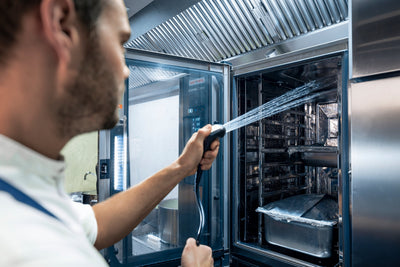
A combi oven is one of the hardest-working pieces of kit in a commercial kitchen. Whether you're running a busy restaurant, a school canteen, or a catering operation, your combi is likely on from first thing in the morning until close: steaming, roasting, baking, and everything in between. That versatility is exactly what makes it so valuable, and exactly why protecting your investment with proper maintenance matters.
At CaterCombi, we've been supplying and servicing refurbished combi ovens across the UK since 2013. We know better than most what separates a unit that lasts a decade from one that needs costly repairs inside 18 months, and it almost always comes down to how well it's been looked after.
Here are the 7 essential maintenance steps every operator should follow.
1. Clean the interior and exterior daily
This is the foundation of everything. After each service, wipe down the interior cavity with a soft, damp cloth or use your oven's built-in automatic cleaning programme. Remove food debris and grease before they bake on and become much harder to shift. The exterior should be wiped down too; stainless steel looks professional and lasts longer when it's not coated in splatter.
Always use manufacturer-approved cleaning agents. Harsh abrasives, wire brushes, or scouring pads can damage the oven's surfaces and, on older refurbished units especially, accelerate wear. Check that your liquid cleaner reservoirs are topped up, or that you're stocking the correct cleaning tablets for your model (Rational CareTabs, Unox Det&Rinse, Convotherm EasyClean, etc.).
2. Keep the door seals clean
The door gasket is your oven's first line of defence against heat and steam loss. Food residue and grease work their way into the seal over time, causing it to become sticky, brittle, or deformed. Clean it regularly with a mild detergent and a soft cloth, and make sure it's fully dry before you close the door.
This takes two minutes and can add months, if not years, to the life of the seal.
3. Inspect and replace door gaskets on a schedule
Cleaning is one thing; replacement is another. Even well-maintained gaskets wear out. Inspect yours regularly for tears, stiffening, or deformation. As a guide, high-volume kitchens should replace door seals every quarter, while moderate-use operations can typically get away with every six months.
A damaged or poorly sealing gasket allows heat and steam to escape, which hits cooking performance, energy efficiency, and eventually, your bottom line. It's a cheap fix that's easy to ignore until it becomes an expensive problem.
4. Descale the steam generator regularly
Limescale is the silent enemy of any steam-based cooking system. Mineral deposits build up in the boiler and steam generator over time, reducing efficiency, restricting water flow, and, if left unchecked, causing breakdowns.
Use a descaling agent appropriate for your oven model and follow the manufacturer's instructions precisely. This includes placing cleaning agents in the correct compartments and running the correct programme. If your oven has an automated descaling cycle, use it; don't skip it because service is busy.
5. Maintain your water treatment system
Combi ovens rely on a consistent, clean water supply to produce steam properly. If your site uses hard water, a treated water supply is essential, not optional. Limescale problems are dramatically accelerated without one.
Your water filter and treatment system needs its own maintenance schedule. Filters should be changed regularly to ensure the correct water pressure and quality is maintained throughout the oven. Neglecting this is one of the most common, and most avoidable, causes of steam generator failure we see.
6. Test the safety systems
It's easy to overlook the safety features when everything seems to be running fine. But door locks, emergency stops, and overheat protection systems should be tested periodically to confirm they're functioning correctly. These aren't just regulatory requirements, they protect your staff and your equipment.
If anything seems off, don't wait. Get it looked at before it becomes a more serious fault.
7. Book regular professional servicing
Operator-level cleaning and checks are essential, but they're not a substitute for professional planned maintenance. A qualified combi oven engineer will carry out procedures that go well beyond what's recommended for kitchen staff: checking for internal leaks, calibrating temperature sensors, inspecting fan motors, lubricating moving parts, and verifying that your oven is performing to specification.
How often you need professional servicing depends on how intensively the oven is used. High-volume operations may need a visit every three to four months; others can get by with twice-yearly. Your manufacturer's guidelines are the starting point, but your engineer will help you build a schedule that suits your kitchen's demands.
At CaterCombi, all our refurbished units are put through a comprehensive 57-point maintenance checklist before they leave us. And we offer ongoing support to customers across the UK, because a combi oven that's properly looked after is one that keeps earning its place on your cook line.