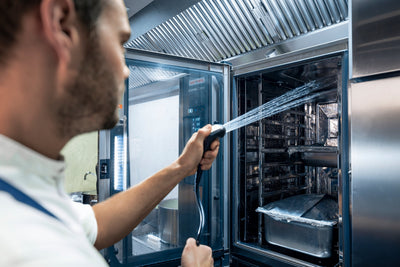
If your combi oven seems to be working harder than it used to, the cause might not be age or usage; it could be scale.
A recent feature in Catering Insight put a number on a problem most kitchens underestimate: even a thin layer of limescale forces equipment to use significantly more energy just to keep up. According to commentary from BRITA's Professional Filters team in that piece, just 1mm of scale build-up can increase energy use by around 7% (comparable to driving in first gear at speed, with the engine working far harder than it needs to).
For commercial kitchens running combi ovens daily, that's not a minor inefficiency. It's a steady drain on running costs that builds invisibly until something fails.
Why Scale Is a Bigger Problem Than It Looks
Limescale forms when calcium and magnesium in hard water are heated, leaving deposits inside boilers, injectors, valves, and pumps. The Catering Insight piece highlighted a few consequences worth taking seriously:
Energy use climbs steadily
Equipment has to work harder to reach and hold temperature, so running costs creep up even before anything visibly goes wrong.
Components wear faster
Pumps, valves, and injectors under constant extra strain have a shorter working life, leading to more frequent repairs.
Descaling alone isn't a full fix
Descaling treats a symptom rather than the underlying cause. Between descales, scale is already accumulating and energy use is already creeping up.
Downtime has knock-on costs
A combi oven going down doesn't just mean a repair bill. Menu changes, service slowdowns, and, in serious cases, temporary closures all follow.
Hard Water Is a Bigger Issue Across the South East Than Many Realise
Water hardness varies hugely across the UK, and large parts of the South East- including much of Kent and the wider Canterbury area - sit firmly in hard or very hard water zones. That means kitchens here are more exposed to scale-related strain on combi ovens than operators in soft water regions, even if the equipment itself is identical.
The starting point, according to BRITA's guidance referenced in the article, is simple: test your water before assuming a filtration setup is right.
What This Means for Your Maintenance Plan
The most effective approach isn't just reactive descaling, it's proactive monitoring paired with the right filtration for your specific equipment and water hardness. That means:
1. Testing water hardness at your site rather than guessing.
2. Matching filtration to each appliance - a combi oven running high volumes has different needs to a dishwasher or ice machine.
3. Scheduling descales and filter changes ahead of failure, not after a breakdown.
4. Tracking filter capacity and replacement timing, so servicing becomes predictable rather than reactive.
This is exactly the kind of preventative approach we build into combi oven servicing and maintenance plans: catching scale-related wear before it turns into an unplanned breakdown, and keeping energy costs from creeping up unnoticed.
FAQs
How much does scale really affect energy use in a combi oven?
Industry commentary suggests even 1mm of limescale can increase energy consumption by around 7%, as equipment has to work harder to reach and maintain temperature.
Is descaling enough to solve the problem?
Descaling helps prevent full breakdowns, but it doesn't undo the higher energy use that builds up between descales. A proactive filtration and monitoring approach addresses the cause rather than just the symptom.
Why does this matter more in the South East?
Much of Kent and the surrounding region has hard water, which accelerates scale build-up compared to softer water areas — meaning local kitchens see this issue sooner and more severely.
What's the first step if I'm not sure how hard my water is?
Get your water tested. Filtration and descaling schedules should be based on actual hardness levels and your specific equipment, not a generic assumption.